The Heritage Crisis for Historic Churches

Why Now Is the Moment to Act
Across the UK, historic churches are facing what many heritage leaders are calling a quiet, unassuming crisis of visibility. Beautiful, hallowed buildings that have anchored human communities for centuries are now on the brink. They are deteriorating steadily, often unnoticed, as the volunteer networks that support them shrink and essential repairs become unaffordable.
The scale is no longer contested.
It is estimated that £115 million a year is required simply to keep churches open and over the past decade thousands have had to close. The 2025 Heritage at Risk Register confirms that 976 churches and places of worship are now officially at risk of being closed or facing long-term decline
At the timely and well received Great Expectations Conference at the V&A Museum recently, the National Churches Trust's Sir Simon Jenkins reminded delegates that “The fate of English parish churches is quite simply the dominant historic buildings issue of the day.”
And I've been talking to a number of groups over the past year who are trying to generate funds for refurbishment or preservation of these places and some key themes have emerged around generating income, surplus and purpose. Please follow our channels to find out more about this with tips for how small volunteer led groups can think differently about utilising these spaces and places and how they can access funding.
This is not a marginal challenge. It is one of the most significant cultural and civic issues we face. I also cannot think of a better example of how we can help transform better outcomes for communities through social good work at a time when many places and spaces feel left behind.
This is also more than a conversation about fixing up the church roof, it involves a serious engagement about the future purpose of our churches and how we view them as hubs and focal points in our communities.
Churches Are More Than Buildings
Heritage and Identity
There are around 38,500 church buildings in the UK and, right now, communities are the quiet keepers of a vast, decentralised national collection of stained glass, carvings, memorials, silver, craftwork and story. These buildings map the civic identity of towns and villages; they are the only historic record of the people who shaped them.
Wellbeing and Connection
Churches provide quiet space in an age of digital disruption and suburban hustle and bustle; they have always been a sanctuary from this. They offer warmth and welcome, and serve as community anchors during life’s defining moments: birth, life and death. For many rural areas, they are the last publicly accessible indoor space and are widely used of course for faith based gatherings but they have a wider use for meetings, events and convening - humans connecting, helping each other and discussing the issues of the day everything from community cafes, toddler groups, dementia workshops, knitting circles and music concerts.
Place and Nature
Churchyards are among the oldest green enclosures in Britain, offering biodiversity, ancient trees, habitat continuity and a direct connection to nature — often the only such green space left. They are protected nature zones which can enrich community experience and our wellbeing. Only recently the Bat Conservation Trust estimated that over half of churches are home to protected species and they can create opportunities and challenges for fellow house mates (and church wardens). Beekeeping is also a popular way to generate funds and some churches have ventured into Champing as a different way for humans to connect with sacred spaces.
Skills and Craft Futures
Repairing churches sustains specialist crafts: stonemasonry, leadwork, lime mortars, stained-glass conservation, heritage architecture and design. Yet as Dr Tristram Hunt, Director of the V&A noted, heritage craftspeople are increasingly in short supply. Churches preserve not just history, but the specialist skills required to carry that history forward. But where is the next generation of heritage skills folks? Shout out to some leading work here by York Minster which this year opened the brilliant Centre of Excellence for Heritage Skills and Estate Management.
The Pressure Is Intensifying
Even with the support of the big national philanthropic funders, the situation for churches as historic building and assets is worsening and Diocese leaders are feeling the operational challenge.
- In 2024, the National Churches Trust (NCT) awarded £2.8 million in grants and was able to fund one in four applications, with demand far exceeding available support.
- Changes to VAT rules have increased the cost of major repair works for listed churches by roughly 20%, placing essential maintenance out of reach for many. We welcome the Archbishop of York's recent call to make the Listed Places of Worship Grant Scheme a permanent fixture.
- A recent survey suggests 5% of churches may close by 2030, with rural areas likely to be hit hardest.
- There's a really important mix of potential sources of income beyond regular church attenders and plate givers - there's a real interesting tech challenge here around how to get communities supporting these places based on their place and connection. How can "churchcrawlers" become a mobilised tribe to save these spaces?
Human Generosity is the bond
It is essential to take a moment to thank the committed volunteers who keep churches running. They are a movement of diverse characters who keep these places and spaces active.
A senior church leader recently talked openly about the challenges:
“It is simply unrealistic for these glorious buildings to rely on tiny groups of mostly elderly people to look after and pay for them.”
And, very much like the buildings, these people need to be acknowledged and cared for but many of them don't ask for help. The job of stewarding these buildings often falls into friends groups, place-based volunteers who are passionate about their connection and have pride in their community.
A New Approach: Flip the Narrative
The message is clear and over the past year this has been repeated to me many times: we need a new approach and innovative thinking and a new national settlement on how to move forward in the digital age.
To do this we need to have an open discussion about the challenges and convene the creative thinkers to look at reimagining churches for the future. In the age of transformation, what's the viable options for many different types of churches and cathedrals across the UK?
Our recommendations:
- Recognise the changing demographic of community volunteers and unpack the role of the Diocese as key governance owners and priority setters.
- Refocus the policy conversation on the national and regional importance of churches with a strong unified role to be played by Combined Authorities.
- Unlock different types of partnerships that make a difference across business, philanthropy, heritage bodies and government. These should be placed based and volunteers have the ability to change the dial on this.
- Reframe churches as assets for heritage, wellbeing , environment, skills development and community cohesion not as costly liabilities.
- How does digital connect and bring heritage to life for all generations and how can it help us safeguard sustainable opportunities for the future.
- Think broader about what these places and spaces can do for their communities in the next 100 - 500 years. What do people on the ground actually think?
The National Churches Trust tells us See them. Save them. Support them. I encourage you to reflect on this as you wrap up the year of 2025. What does a particular church space mean to you?
A Call to Action: Join Us in York
This defining moment requires collective action from people like you to help create clearer thinking and new alliances.
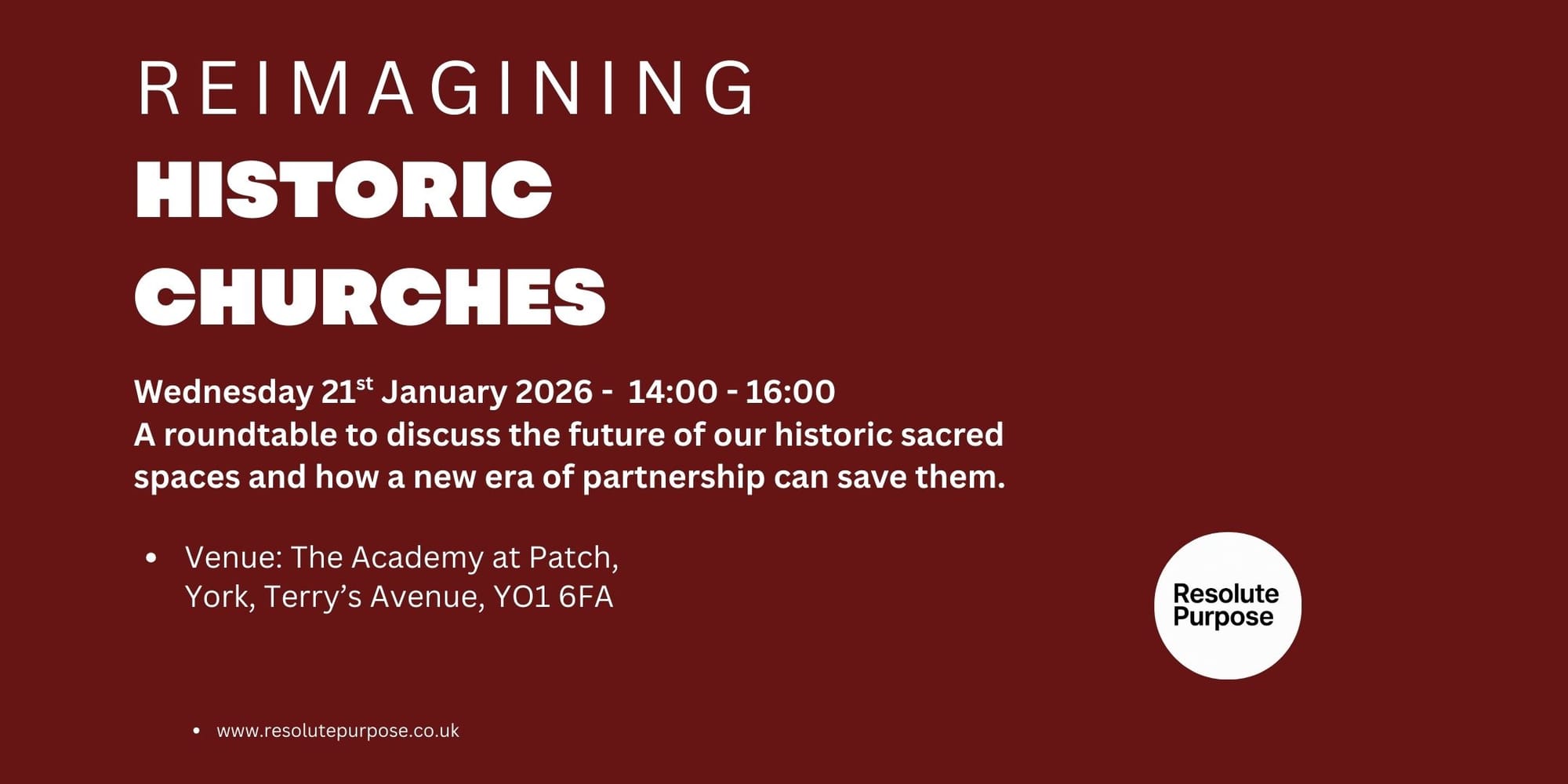
Resolute Purpose is convening partners, funders, heritage organisations and community leaders in York on Wednesday 21st January 2026 at our first roundtable event to continue the conversation sparked over this year. The aim is simple, we want to help shape a practical, place-based response for the North and beyond.
If we are to shift the trajectory, we must change the story and bring together the different interested parties who can make a difference and primarily because the scale of need is significant and the solutions and approaches similar. This one is for those keen to explore the role of digital heritage opportunities, those involved in church fundraising and stakeholder engagement and those who want to know more about the heritage crisis.
To join us in York. Please sign up to our wait list with our panel to be announced soon.