Reimagining Historic Churches January 2026

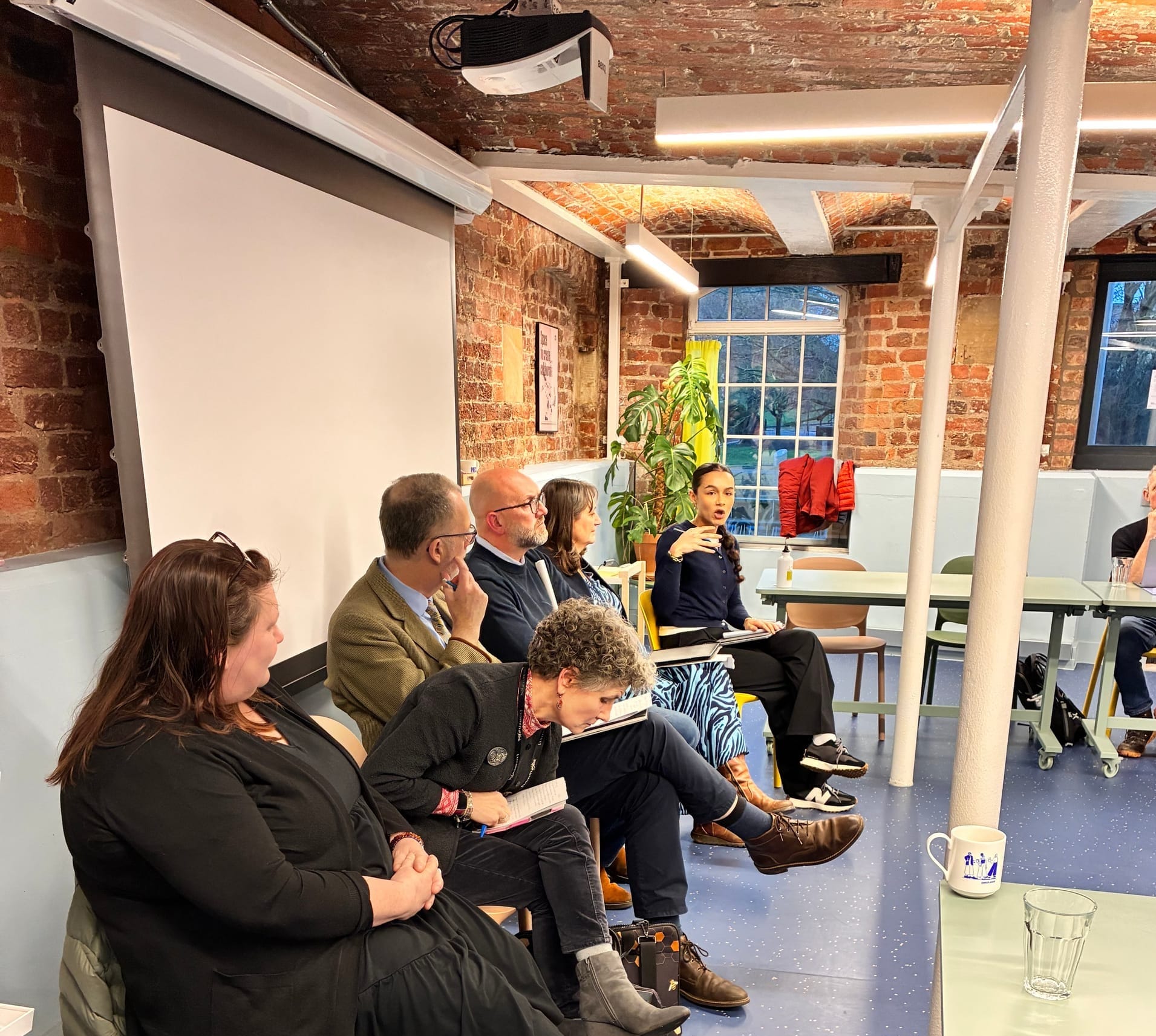
On Wednesday 21st January 2026 colleagues from across sectors joined a discussion held at Patch Places, York, to run through the key challenges facing historic churches led by discussions from a panel of knowledgable types.
Our panel included:
- Hazel Curtis — Heritage Lottery Fund
- Sarah Crossland — National Churches Trust
- Kate Cameron & Keith Halliday, York Diocese
- Andrew Boyce — Donald Insall Architects
- Louise Hampson - University of York
Here is the slide deck:
Powerpoint slides from the Event on 21st January 2026
Briefing Notes on the Key Points
Communities are changing and churches must adapt.
Sustainability is no longer just about maintaining buildings. The emerging National Lottery Heritage Fund 2033 strategy challenges us to think about environmental responsibility, financial resilience, skills development and community relevance. It is a broad definition that applies across all operational areas of this sector.
The scale of responsibility is significant.
With 154 Grade I listed buildings currently registered as 'at risk', the challenge is national in scope. Volunteers remain the backbone of church heritage, but long-term resilience requires stronger structures, scalable fundraising, and better support systems to deal with the pressure on the system for repairs and maintenance. Climate change is putting more pressure on our buildings : their ability to deal with greater rainfall in wetter winters and cope with intense heat in our new look summers means architects must respond to new designs and increased maintenance costs for future improvements.
Resilience is the central theme.
From Louise Hampson's discussion of Resilient Heritage Models to discussions around governance and financial planning, the focus was clear: we must build capacity for the future, not simply respond to crisis.
Renegotiating the ‘contract’ with the community.
Historic churches are becoming more outward-facing and clearly demonstrate public benefit beyond faith based congregations. Being “quintessentially British” is an asset but relevance and engagement are essential for future sustainability. The high risk to rural churches was noted and we felt these could be forgotten about because they sit in perceived affluent areas of the local region.
Skills and young people are a major opportunity.
Partnerships with colleges and universities could help address heritage skills shortages while creating new pathways for employment. Climate change (from net zero heating to practical adaptations like larger gutters) is also proving a powerful way to engage younger generations.
Encouraging case studies.
Projects in Nottinghamshire, North Yorkshire (the Malton Wesley Centre) and the emerging young congregation at St Michael le Belfrey, York, and resilience work at Wetherby Methodist Church all demonstrate what is possible when mission, heritage and community align.
Funding and collaboration remain critical.
The work of the National Churches Trust has been essential to shine a light on this heritage crisis, but funders are often oversubscribed with applications for grants. We welcome the rise of greater knowledge-sharing (including national webinars) and these underline the importance of collective action. There are different approaches which fundraisers can take to securing additional funding needed beyond the big church funders.
The wider treatment of potential income streams such as the Tourist Tax for cities like York encourages a question about whether there is a benefit directly to help preserve and conserve the heritage scape of our city and communities. Who should ask if there is a new opportunity to invest in heritage for historical places?
Please sign up to our Historic Churches Mailing List to find out more on future events. We could feel the power and enthusiasm in the room.
Listed Places of Worship Grants Scheme Ends - a note from Sarah Crossland, Head of Stakeholder Engagement, National Churches Trust
As we met in York the UK Government announced a further £92 million funding through a capital grants renewal scheme alongside the cessation of the current Listed Places of Worship Grants Scheme which sees the reclaim on VAT for all churches ending in April 2026.
The National Churches Trust full response was announced on its webpages and the following statement issued:
'We welcome the announcement of a new capital funding scheme for the country’s religious heritage. We have been campaigning for this for some time, and we look forward to understanding how the new scheme will operate. Churches depend overwhelmingly on volunteers so the scheme will need to be simple, accessible and predictable if it is to be a success. However we are very concerned that in future listed places of worship will have to bear the full cost of VAT on repairs. This brings to an end a system that has operated successfully for over 20 years. It means that in future local people will have to raise money not just to repair roofs and towers but to pay 20% tax to the Government. Museums and galleries offering free admission don’t have to pay VAT on repairs, but in future churches will. We call on the Government to end this unfairness and not to expect local volunteers to pay these extra taxes.'
You can find out more information on the following links: