Leadership Lessons from The Odyssey

What Christopher Nolan's new film The Odyssey tells us about purpose, leadership and the decisions that shape us.
Leadership has never been about having all the answers. Yet, in an age of twenty-four-hour news, social media constancy and pressure for instant results, we often expect leaders to make perfect decisions with imperfect information or scenarios.
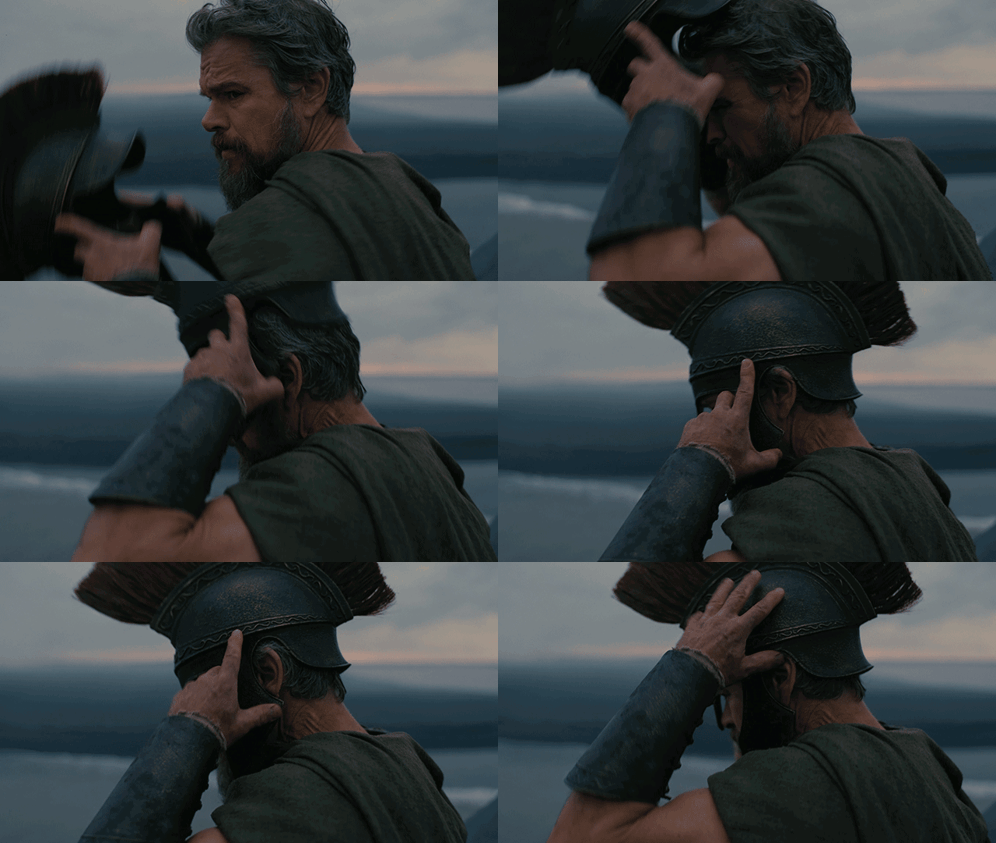
That is one reason why Christopher Nolan's The Odyssey, starring Matt Damon as Odysseus, feels remarkably relevant today as it hits IMAX screens across the world, breaking box office records and bringing Homer's epic Greek poem to a new generation of cinema goers.
Beneath the sweeping cinematography, immersive music and epic mythical liaisons lies a much quieter story: one about 'human' purpose, judgement and what it means to keep moving forward when every option carries high risk and potential for failure.
In The Purpose Brief we often explore leadership through the lens of place, generosity and community but some timeless tales continue to teach us just as much as policy papers or management textbooks.
The character Odysseus is not portrayed as an infallible hero: he is the thoughtful warrior with purpose. He is flawed, at times impatient, at others, resilient. His greatest strength is not that he avoids mistakes, but that he continues to learn from them without losing sight of where he is trying to get to: home in Ithaca. He has many brutal choices to make along the way and there are consequences for all his decisions and the mythical characters experienced along the way.
Perhaps that is one of the defining characteristics of purposeful leadership. We can never be fully certain of change and the decisions we make, but we can continue to give clear direction to where we want to be and authentically acknowledge the difficult choices that are faced along the way.
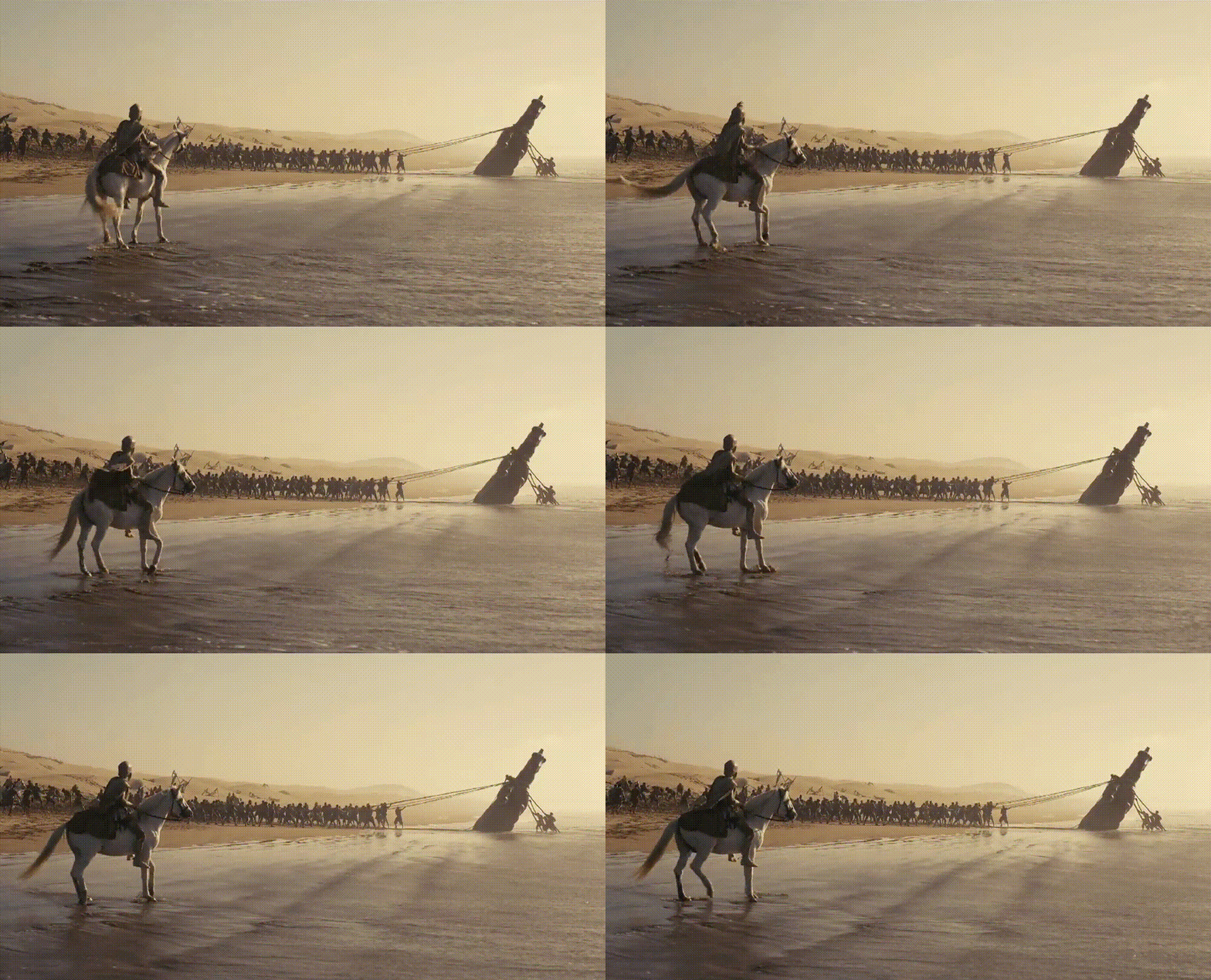
Today's leaders face their own versions of uncharted seas and Charybdis. Government is redefining it's role in society under a new Prime Minister. Businesses are balancing commercial success with social value. Charities are navigating increasing demand alongside tighter resources. All impacted by the geopolitics they have no control of at a time when communities are asking questions about trust, belonging and who really benefits from growth.
On any given journey even the most beautifully crafted maps are never perfect, and they quickly fall out of date. When times are tough there is a temptation to bail out the next ship, chase another moving target. And sadly sometimes some leaders are enchanted by Sirens who take them off course, losing sight of the bigger goal. Odysseus chose to hear those voices but not be caught out by their fatal charms.
Odysseus masterminds the smartest of Trojan horse tricks on his competitor and he spends the rest of his life dealing with the consequences of what it unlocked and the seismic ripple effect his original purpose had.
But the real question raised for leaders in this story is the importance of the quest to find our own leadership Ithaca, the destination or end point for what we seek to achieve. In reflecting on this, this is not just about organisational strategy, it's also about your own personal purpose.
What is the destination that keeps you anchored when circumstances change? For an organisation, it may be its founding mission. For a community, it may be creating opportunity for the next generation. For an individual leader, it may simply be remaining true to a set of values when compromise feels easier.
Purpose does not eliminate uncertainty. It gives a helpful framework for making decisions within it. That is why leadership is less about always choosing the right path and more about consistently navigating a route that aligns with the destination you are trying to get to. This is an important point to remember both individually and professionally.
The ancient Greeks understood something that still rings true today: journeys shape people far more than destinations ever could.
Perhaps that explains why Homer's epic continues to resonate after almost three thousand years. The names and places may have changed, but the questions remain strikingly familiar. How do we respond when plans fall apart? How do we remain resilient without becoming rigid? How do we adapt without losing ourselves or our people?
These are not simply questions for mythical kings and god-like figures. They are questions for humans who also happen to be elected officials, vice-chancellors, chief executives, trustees, elected mayors, social entrepreneurs, volunteers and anyone entrusted with leading others through uncertainty.
As the credits rolled, I found myself thinking less about the monsters Odysseus encountered and more about the decisions he made along the way on the back of difficult choices. Perhaps purpose is not found at the end of the journey after all. It is not a fixed point. It is probably revealed in every decision we make on the journey itself.
In a world increasingly driven by speed and tech, the leaders who will have the greatest long-term impact may not be those who arrive at the KPI first. They may be those who never lose sight of their leadership Ithaca, their guiding ethos and the acknowledgement of their own impact. And that could be the most purposeful thing they can do in times of uncertainty.