Good Ol' Charlie Brown!
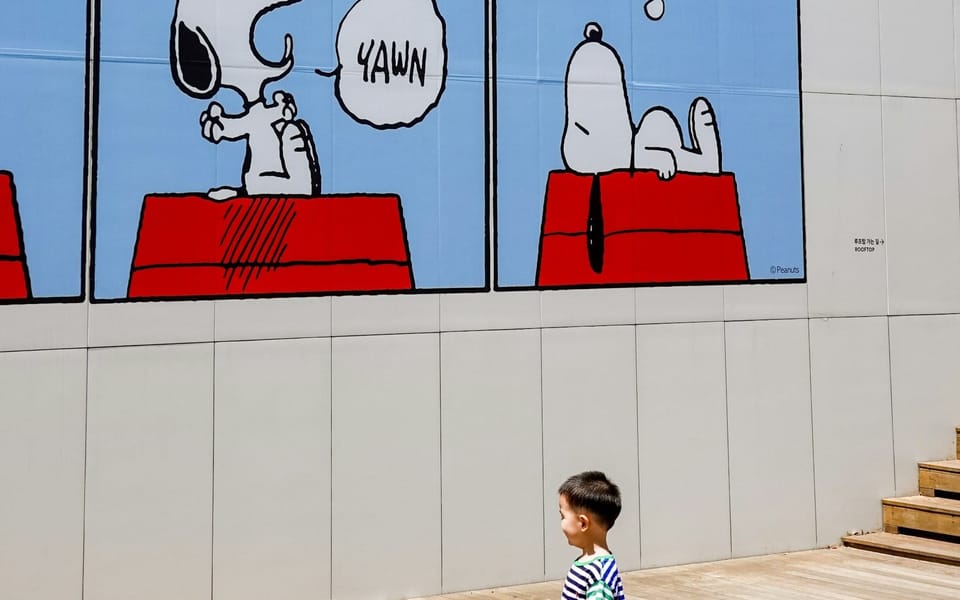
This month marks the 75th anniversary of the publication of the first Peanuts comic strip. Let's take a moment to think about what purpose meant to the creator and illustrator behind this work.
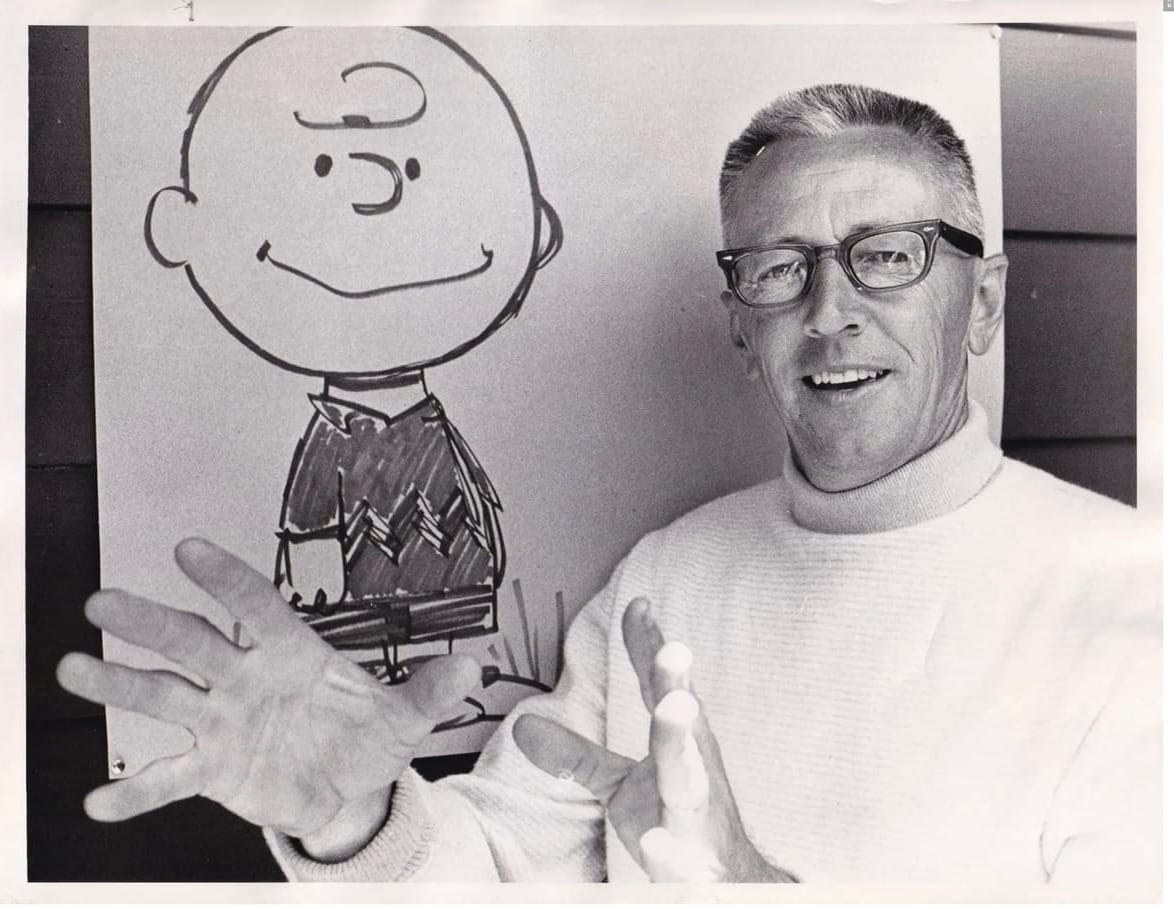
Who was Charles Schulz?
Charles M. Schulz was born in 1922 in the American Midwest. He was the son of a barber, from humble stock, and served towards the end of World War II before returning to his home town to work in newspaper illustration. He loved to draw.
Schulz (nick-named Sparky by his uncle) was relentless in his focus on developing a suite of characters through the Peanuts comic strip. He devoted his whole life to the project and these are characters that continue to capture the imagination of audiences through the exploits of a Beagle called Snoopy and the reflections of his owner, the 'wise old-soul kid' called Charlie Brown.
You could say that Charlie Brown and his escapades were some of earliest examples of "first world problems" and whilst the world has changed around us and the childhoods within it, there is something powerful in his story that continues to resonate with readers. Charlie Brown takes people with him across generations and continents.
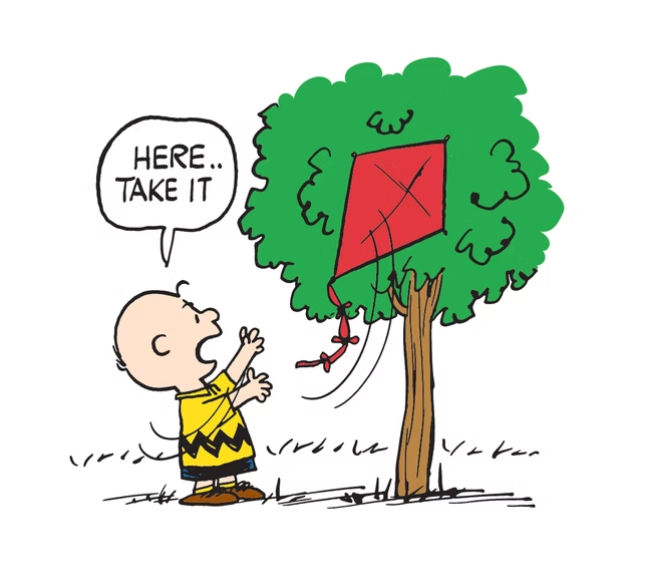
Over his life Schulz drew 17,896 editions of Peanuts and created a major merchandising and licensing business which at its height was reaching 150 million newspaper readers daily in the USA. His most important channel was newspaper distribution across the world. The famous A Charlie Brown Christmas TV Special in 1969 was watched by 55 million people. Peanuts - the business - created wealth and the family continue to give back to their communities. Charles built his own ice stadium in California in the late 1960s continuing his love of sport and hockey.
Schulz's purpose was always clear: he was most happiest as a cartoonist and illustrator and loved his craft, surrounding himself with the friends and creatives he needed to do deliver his vision.
There's something very familiar about Shultz's small town American world and it is widely acknowledged that his style was a response to the growth and boom of the post World War II era. It created a nostalgic aesthetic which represented a new found confidence, was reflective of the challenges ahead and came from a time when "American capitalism was perhaps a little more innocent" argues Dr Paolo Dini at the LSE.
Growing Up in a Time of Change
The character of Charlie Brown was pretty straightforward but like us all he has matured over time even though he will always be the oldest kid on the block (seventy five years on). Throughout the interactions in the Peanuts universe, he continues to learn about the world alongside his diverse group of school friends. He's slowly dealing with self care, taking time to reflect on the challenges of life but he is not afraid of the prospect of losing in the face of confident boisterous neighbourhood rivals and sparky personas like Lucy and Peppermint Patty.
If you read various interviews with Schulz over his career you understand how he has developed a suite of characters around different personas that represent the many sides of a his own character: humans are not fixed and have many layers of complexity.
"I don't think you can create humour out of happiness alone"
- Charles Schulz
When asked in an interview in the 1990's, Schulz reflected that his characters were not meant to be perfect; they were shaped by self doubt, yearning and insecurity. These gave them a hyper-humanity which helped him develop his ethos of humility and pride in the under dog. Shultz was aware of the need to fail, to try again and encouraged this mindset amongst his audiences.
Schulz was a spiritual person with a family of his own and he talked openly about how the traditions of his religion and fatherhood gave him a great story arc. There are subtle references to this in the comic strip particularly in seasonal times. But whilst there is religion as a theme and very little adult presence in the cartoon strip, the narrative is very much driven by some universal core values and behaviours.
There is a little shared purpose in all the Peanuts characters and no matter what they face, they work things out, in spite of difference. This is generally the outcome when they get together through team sports and seasonal occasions.
As we think about how communities can work together, I think Charlie Brown and Co. give us some great social good values and these run through the decades of these comic strips.
• Perseverance and Hope
• Kindness and Empathy
• Integrity and Self Awareness
• Humility & Ordinary Greatness
• Imagination and Freedom
• Community and Acceptance
• Quiet Reflection
• Resilience in the face of Adversity
A Sign of the Times
Schulz was always mindful of the reach of Charlie Brown and the Peanuts comic strip as it grew in popularity. And he listened to and watched what was changing around him by speaking to his audience. Remember this was in a time when you could simply 'write in' or 'call up' to speak to him if you wanted to raise any issues. He got to know his readership well over the years.

In 1968 Schulz introduced Franklin, the first black character in the comic strip after correspondence with LA based schoolteacher, Harriet Glickman, who felt strongly that role models, in this era, could help sway the national civil rights debate.
Following a series of conversations and letter correspondence, Schulz took the decision to push his publisher on the introduction of a new character. They were worried about kick back from some newspapers and advertisers. He is famously quoted as saying to them: "you print it the way I draw it or I quit."
Franklin and Charlie developed to be trusted friends and allies on their baseball team, sharing stories about their experiences. Schulz didn't want to make a political point, he was responding to systemic change and understood the power of his characters and the symbolic cultural role they played.
Franklin was, like most Peanuts characters, he was based on real life people. In the 90s, Franklin's surname had never been revealed but after meeting Schultz , artist Robb Armstrong one day received a call to check if it was OK for Franklin to take on his surname. Rob, with mentoring support from Sparky, established Jumpstart Comics and he has worked closely with the Peanuts team to establish the Armstrong Project, an endowment led partnership in the USA, to foster opportunities for students at black colleagues and universities working in the USA to pursue careers in animation, film and television.
The character of Franklin alone continues to inspire future generations based on the ethos of Peanuts : that change and diversity could be embraced together with quiet reflection and social action.
The Legacy Lives On
Charles Schulz sadly passed away in 2000 at his home in Santa Rosa, California, the day before his final comic strip landed. He was 77 years. In his final press statement he declared "I've drawn about 18,000 strips. I've said everything I wanted to say." He was deeply pragmatic about his art and the contribution of his creativity. He was reported as saying in his conversation to aspiring cartoonists "Cartooning will break your heart" and on the mantra of Charlie Brown, he openly said it would most likely be "To live is to keep trying".
Schulz's creative ethos continues to generate multi-million dollar income through licensing and new media partnerships with a recent deal with Apple TV and WildBrain. This creates new business opportunities that will only see the rise in popularity of the Peanuts brand and curation for future generations through digital streaming. They've moved Charlie Brown and his friends into the digital age.
The Charles M. Schulz Museum and Research Center in Santa Rosa, California, USA, remains the primary guardian of Schulz's work, holdings and exhibitions with strong partnership work with organisations across the world. Jean Schulz, Charles's wife, is President of the Board of Directors where she chronicles her own adventures in cartooning and her life in and around the world of the Peanuts characters.
For the 75th Anniversary the Charles M. Schulz Museum in Santa Rosa is running a number of special exhibitions and online collaborations including HA! HA! HA! HA! 75 Years of Humour in Peanuts (Sept 20 2025–Mar 18 2026) . You must give them a follow on your chosen channel of preference and please keep an eye out for their innovative fundraising campaigns.
What it means to me
As we celebrate this anniversary, I've reflected on what Shultz's work means to me, a kid from a rural place with good memories of childhood. Charlie Brown reminds me of that time; he reminds me of Saturday mornings catching up on this week's comic strips and unpacking these with Grandad Tom and it makes me reflect on how learning and childhood has changed. This was an era of childhood which was not on demand. I keep a couple of Charlie Brown comic strip books on my book shelf and sometimes I just have a peak in and a chuckle to myself. And via good US based friends I know how much Americana is linked into the Charlie Brown story particularly at this time of year. It's a huge part of shared American identity.
But what Charlie Brown and friends teach us most about is the importance of purpose in our selves and some basic fundamental principles that can help us do good things and be better.
For me these are the importance of being responsible for our own actions; the power of resilience and the need for connection and conversation in communities.
The modern irony here is that it was a human-created set of animated cartoon characters who began to teach us these values over 75 years ago and who have endeared themselves to us to this day. What a legacy to leave, thanks Sparky.
Here's your prompt to take forward some positive thinking as you unpack your Tuesday. Have a good week.