Good Growth: The Rise of ‘Manchesterism’ and Northern Place-Based Leadership.
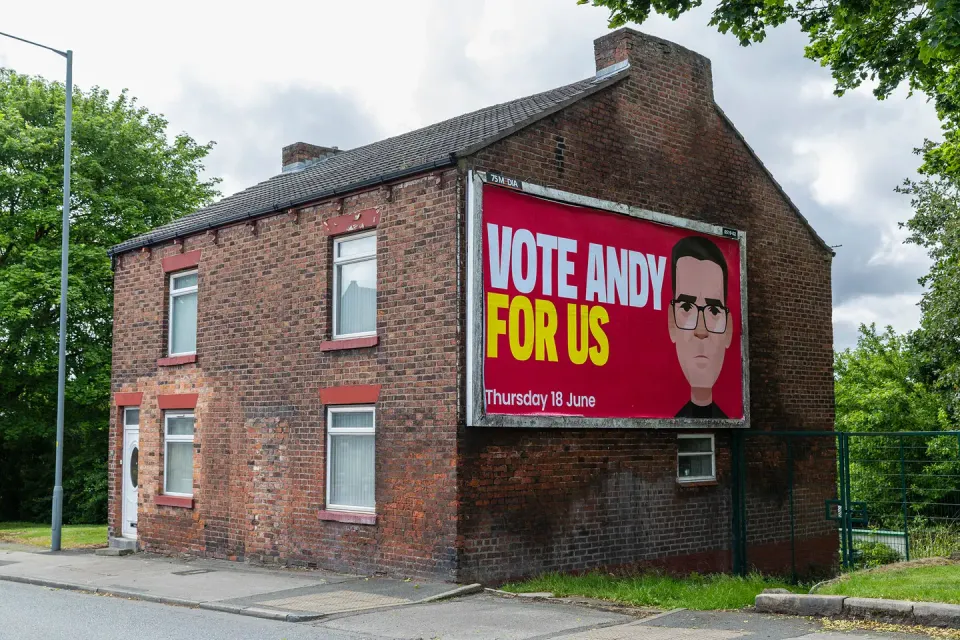
What does the return of the former Mayor of Greater Manchester as a Member of Parliament tell us about power, place and the future of civic leadership?
It is now irrefutable that public trust in institutions is at a low ebb with the cost of living and 'bad news' media shaping views sharply across political divides. The recent moves in the constituency of Makerfield, in the North West, demonstrate clearly that the battle lines are now drawn to rewrite the future direction of the UK.
Today, Andy Burnham, the new MP for Makerfield, launched his vision for Britain at an event in Manchester in his bid to become the next Labour leader and Prime Minister. ‘I am going to do things differently’ he tells us.
In his speech he talked about new directions, post-Brexit turmoil and falling living standards since the 2008 banking crisis. He say’s the government institutions of Westminster and Whitehall are broken because they are set up for the business of conflict and as a result the country is stuck in a rut. The UK is, he argues, an over centralised state, pulling in different directions.
He took responsibility as a politician of the current generation and argues for radical change to how party politics works. He sees the shift and systemic problems as he returned to London this last week.
“We need a determination to raise living standards, to fix the economy and therefore the country.”
He promised to take power out of the centre, creating a new sense of agency and possibility for people on their home patch. He talked about place first, problem solving over the long term. And in Manchester he achieved this by working across the party lines.
"We ask everyone to face the same way and pull in the same direction."
Mr Burnham promises to work hard to create a culture of change. He is unapologetic about his rationale for this, and he aims to bring together the broadest voices to lead forward. He wants to create unity in Parliament and across parties.
We will never secure growth, he argues, until every single postcode in the country achieves it's ambitions. He talked about rebalancing of power – the greatest move in a generation. He talked about ‘Manchesterism’ and a vision for good growth and a rejection of the old trickle-down model.
He mentioned, on a number of occasions, the concept of good growth, the new role of Manchester as a home for a new No 10 North. It’s important to the mission of his proposition to take growth deep down into communities but that also creates some challenges for working cultures in Whitehall and Westminster and that desperately London-centric approach to dealing with the shires.
"Hope in every heart" - that is Andy's vision for the future and it's a vision that listens, most importantly, to what people have been telling him on their doorstep.
Our View
There's no denying that communities (in their many forms) feel disconnected from decision-makers. These are increasingly unified voices, 'canaries in the coal mine' and have been for some time. Ten years after Brexit we are still spiralling and bearing witness to a rise in ominous political forces that are committed to dividing us. So who better to take this challenge on than Manchester's own 'King of the North', Andy Burnham.
As the course of devolution has accelerated under the current government, mayors and their combined authority teams have become one of the most significant shifts in governance and spending and vision. Among a group of, largely northern, leaders Andy Burnham has arguably emerged as perhaps the most influential and recognisable figure of civic leaders delivering rapid transformation and changes to decision making in places beyond London and the South East.
A former Labour cabinet minister and twice a candidate for the party leadership, Burnham is undoubtedly a product of the Westminster system. Yet since becoming Mayor of Greater Manchester in 2017, his political identity has become increasingly rooted in place rather than party. And as we unpack what the next chapter looks like, this change maker experience is highly likely to move forward in the rest of this term of Government. We need leaders who understand what is needed and who know how to listen to the voice of communities who are feeling left behind.
Devolution in Practice
Burnham's most enduring contribution may be his role in strengthening Greater Manchester's devolved powers. Through successive agreements, the city region has gained greater control over transport, housing, skills, policing and aspects of health and social care.
Perhaps the most visible example has been the Bee Network and the return of bus franchising, creating a more integrated transport system and demonstrating what local leadership can achieve when power is pushed closer to communities.
Whether you see this as a great case study for the future of English governance or merely another layer of bureaucracy, the Greater Manchester experiment has become a model watched across the country and as, as we know they do it so well, Manchester folks are deeply proud of their place and identity and you can see it very clearly when you visit the city.
Leadership Beyond Politics
Burnham's profile spiked nationally during the Covid-19 pandemic when he challenged the Government over financial support for Greater Manchester. To supporters, he became a voice for northern communities. To critics, he was engaging in political theatre on the left.
Yet the episode demonstrated that regional mayors could become advocates for their places and get things done back in Westminster and that is important and is what is needed right now. We see them working together, talking the same challenges. That's a win for communities who have struggled to be heard.
Homelessness and Civic Philanthropy
During his time as Mayor, homelessness was one of Burnham's defining priorities. Programmes such as Housing First and A Bed Every Night have sought to address rough sleeping in Manchester and provide longer-term support.
Less widely recognised is his contribution to the Greater Manchester Mayor's Charity. Established in 2017, the charity was created to mobilise businesses, charities and citizens around homelessness and rough sleeping. Burnham became its founding patron and pledged 15 per cent of his mayoral salary to support its work.
Importantly, the charity represented more than a fundraising drive. It demonstrated how public leadership can act as a convening force, bringing together philanthropy, communities and institutions around shared challenges. Again, a really interesting model of how place-based philanthropy and generosity can work to unlock growth and shared consensus on challenge issues.
Philanthropy cannot replace the responsibilities of government. But civic leadership can encourage greater generosity, strengthen relationships and create the advocacy for communities to respond together.
What does the Prospect of Andy mean?
Andy Burnham represents something of a paradox. He is clearly part of Britain's political establishment, yet many of his most significant achievements have involved moving power away from Westminster and towards place. And perhaps that was always his intention, to focus in and make a difference after his time as an MP. He was educated at a comprehensive and then went on to Cambridge University and whilst he acknowledges what this did for him, he knows skills and prosperity are important for all routes. He's keen to give all young people the accessible routes they need to thrive and build prosperity and wealth. He gave a strong nod to Alan Milburn's recent report on youth and employment.
Whether history remembers him as a transformative leader or simply as the most effective advocate for English devolution remains to be seen. But the leadership contest unfolding raises a much bigger series of questions and a bold choice for all our futures.
As communities seek greater agency, the future of civic leadership depends less on central government and more on leaders who understand the places they serve - leaders who are purpose driven across sectors. Andy Burnham represents that. We should welcome this shift.
Strong communities are not built by policy advisors and investors alone, but through good stewardship of community relations, building trusted and shared purpose around a common goal. These factors have, to date, often been overlooked, but what lies ahead is an opportunity for greater listening and faster paced action. But can it be driven too fast?
With the prospect of the next general election in 2029 to work to, Andy Burnham's success lies in the ability for this new type of political sentiment to deliver real change on the ground. That change is what the public wants to see when they head to the ballot box.
At Resolute Purpose, we explore how leadership, philanthropy and civic action can strengthen communities and create more resilient places. Because social good is ultimately built where people live, work and belong.